Full Heads, Empty Hearts

A needed exhortation for both those who know God’s Word concerning the observing of pagan/papist/traditions of men and those who don’t know (or don’t care to know).  Prayerfully and humbly watch this video and learn what God would have us to know in our relation to our beloved brethren with the knowledge we have been given:

“He does not know that he does not know” that he is arrogant. This is why we must be prayerful when correcting others. Pray for God’s heart in the matter. We need to be mindful of our attitude-are we arrogant with the knowledge we have? Are we wanting to be right and do we have to get the last word in? Can we say what must be said, using God’s Word and His wisdom of approach, then leave it at that even if they reviled us? Are we willing to be corrected without taking offense? Can we not take offense though our corrector is wrong? Watchmen must be on their knees in prayer at all times that God may be glorified and not ourselves. Once we say what needs to be said, and have lovingly answered questions and have overlooked insults (and there will be those false accusations!) then we leave it with our Lord-its His work, not ours.

Principles From Pilate’s Life

From the post, “Christmas-Perpetuating the Lie”:

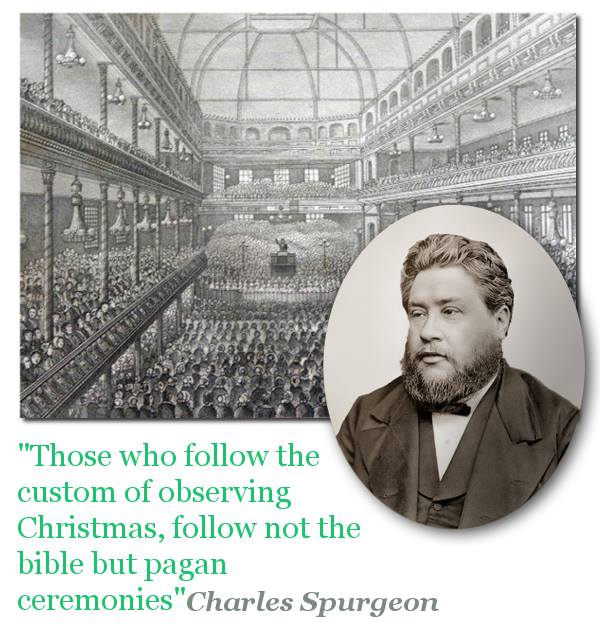
We as human beings are very influenced by our peers. Christmas has been one of those issues for me. I feel it’s time to share, with those who would be interested to hear, why I do not celebrate Christmas. Maybe a better way of saying it would be why I try not to celebrate Christmas. It seems to me that there is something supernatural “surrounding” the celebration of Christmas, because the pull to conform is incredible. This is what the Lord has shown me:…

There are certain principles to be gleaned from the life of Pilate. Years ago as I was seeking the Lord about celebrating Christmas I was led to study the following. I believe the principles apply. There are many reasons why we don’t do what we know to be right. The following excerpts are from the study notes of the New Life Application Bible:

“For Pilate there was never a doubt about Jesus’ innocence.

Pilate went against what he knew was right.

Pilate chose the easier path rather than standing up against the crowd.

Pilate’s greatest sin was compromising what he knew to be true and right for the sake of position, status, and personal gain.

Pilate had no good excuse to condemn Jesus, but he was afraid of the mob.

In making no decision, Pilate made the decision to let the crowds crucify Jesus. Although he washed his hands, the guilt remained. Washing your hands of a tough situation doesn’t cancel your guilt. It merely gives you a false sense of peace. Don’t make excuses – take responsibility for the decisions you make.”

Read the rest of the article here.

“You cannot christianize something that is demonic.”

Error’s Way

error-never-shows-itself-in-its-naked-reality-in-order-not-to-be-discovered-on-the-contrary-it-quote-1.jpg

Save

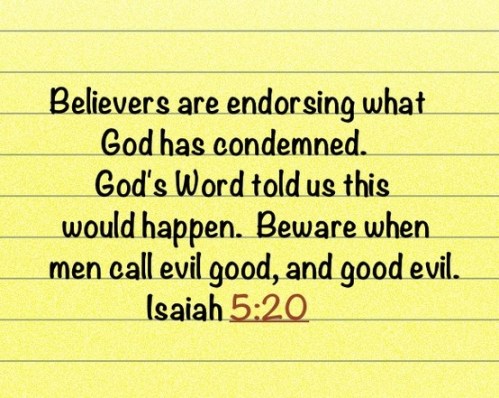
Isaiah 5:20

125a792e5780d3afa8fd24025d30ffef

Save

Save

Save

God Is Grieving with a Broken Heart Today

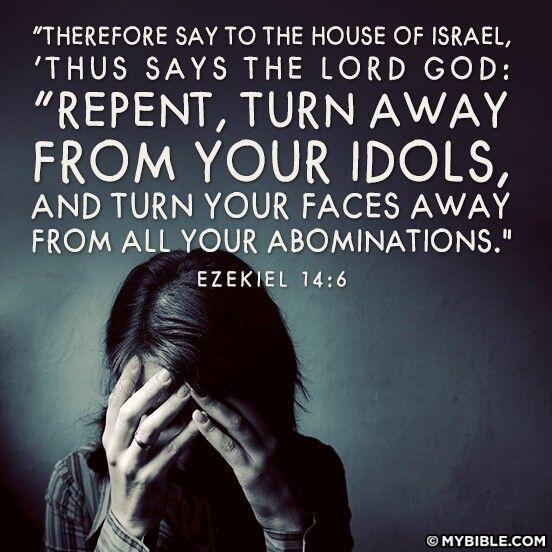
Ezekiel 6:9- And they that escape of you shall remember Me among the nations whither they shall be carried captives, because I am broken with their whorish heart, which hath departed from Me, and with their eyes, which go a whoring after their idols: and they shall lothe themselves for the evils which they have committed in all their abominations. (bold mine for emphasis)

d61561d634a14e9b64539a4991f29c21

Deuteronomy 12:30-31 “Take heed to thyself that thou be not snared by following them, after that they be destroyed from before thee; and that thou enquire not after their gods, saying, How did these nations serve their gods? even so will I do likewise.” Thou shalt not do so unto the LORD thy God: for every abomination to the LORD, which He hateth, have they done unto their gods; for even their sons and their daughters they have burnt in the fire to their gods. 32What thing soever I command you, observe to do it: thou shalt not add thereto, nor diminish from it.

1 Corinthians 10:11- Now all these things happened unto them (God’s Hebrew children) for ensamples: and they are written for our admonition, upon whom the ends of the world are come.

1 John 5:21- Little children, keep yourselves from idols. Amen. (bold mine for emphasis)

Not a Biblical Observance

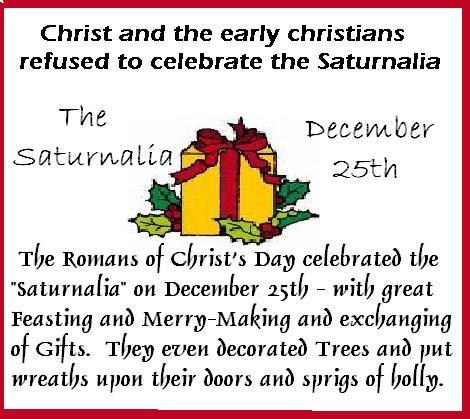
12036643_10206656945136413_562975512199828505_nsaturnalia

Making the Sign of the Cross-Witchcraft in the Roman Catholic Church

https://i0.wp.com/24.media.tumblr.com/6586d224935fa2f0303670a4c2c50ceb/tumblr_mkhtepwPQL1qgs4sno3_500.gif

From this article, False Brethren and False Principles in the Church: Spirit and Character of the Christians:

It is a curious fact that the figure of the instrument of torture on which our Lord was put to death, occupied a prominent place among the symbols of the ancient heathen worship. From the most remote antiquity the cross was venerated in Egypt and Syria; it was held in equal honour by the Buddhists of the East, [316:2] and, what is still more extraordinary, when the Spaniards first visited America, the well-known sign was found among the objects of worship in the idol temples of Anahuac. [316:3] It is also remarkable that, about the commencement of our era, the pagans were wont to make the sign of a cross upon the forehead in the celebration of some of their sacred mysteries. [317:1] A satisfactory explanation of the origin of such peculiarities in the ritual of idolatry can now scarcely be expected; but it certainly need not excite surprise if the early Christians were impressed by them, and if they viewed them as so many unintentional testimonies to the truth of their religion. The disciples displayed, indeed, no little ingenuity in their attempts to discover the figure of a cross in almost every object around them. They could recognise it in the trees and the flowers, in the fishes and the fowls, in the sails of a ship and the structure of the human body; [317:2] and if they borrowed from their heathen neighbours the custom of making a cross upon the forehead, they would of course be ready to maintain that they thus only redeemed the holy sign from profanation. Some of them were, perhaps, prepared, on prudential grounds, to plead for its introduction. Heathenism was, to a considerable extent, a religion of bowings and genuflexions; its votaries were, ever and anon, attending to some little rite or form; and, because of the multitude of these diminutive acts of outward devotion, its ceremonial was at once frivolous and burdensome. When the pagan passed into the Church, he, no doubt, often felt, for a time, the awkwardness of the change; and was frequently on the point of repeating, as it were automatically, the gestures of his old superstition. It may, therefore, have been deemed expedient to supersede more objectionable forms by something of a Christian complexion; and the use of the sign of the cross here probably presented itself as an observance equally familiar and convenient. [318:1] But the disciples would have acted more wisely had they boldly discarded all the puerilities of paganism; for credulity soon began to ascribe supernatural virtue to this vestige of the repudiated worship. As early as the beginning of the third century, it was believed to operate like a charm; and it was accordingly employed on almost all occasions by many of the Christians. “In all our travels and movements,” says a writer of this period, “as often as we come in or go out, when we put on our clothes or our shoes, when we enter the bath or sit down at table, when we light our candles, when we go to bed, or recline upon a couch, or whatever may be our employment, we mark our forehead with the sign of the cross.” [318:2]