Have We?
O you who love the Lord, hate evil! – Psalm 97:10 ~ There is a way that seems right to a man, but its end is the way of death. – Proverbs 14:12
A true Christian would want to examine everything they say, because Jesus said in Matthew 12:36-37, “But I say unto you, that every idle word that men shall speak, they shall give account thereof in the day of judgement. For by thy words thou shalt be justified, and by thy words thou shalt be condemned.” We will now set aside all of the customs, glitter and traditions of Christmas, which were taken from pagan witchcraft and popularized by the Roman Catholic Church, and we will focus on the true meaning of the words, “Merry Christmas!”
The word “Merry” is simple to define. It unquestionably means to be happy, joyful and light-hearted. The word “merry” fits into the ambience of laughter and frivolity. This word “merry” by itself is innocent and innocuous enough, but as we will now see, it becomes heinously blasphemous when used with the word “Christmas.”
Here let it be noted that most people think that the word, “Christmas” means “the birth of Christ.” By definition, it means “death of Christ”, and I will prove it by using the World Book Encyclopedia, the Catholic Encyclopedia, and a book entitled, The Mass In Slow Motion.
If you are an honest, sincere and discerning Christian, please read on; if not, you might as well stop right here. The World Book Encyclopedia defines “Christmas” as follows: “The word Christmas comes from “Cristes Maesse”, an early English phrase that means “Mass of Christ.” (1) It is interesting to note that the word “Mass”, as used by the Roman Catholics, has traditionally been rejected by the so-called Protestants, such as Lutherans, Baptists, Methodists, Presbyterians, Pentecostals and so on. The word “Mass” is strictly a Catholic word and thus, so is “Christ-Mass.”
It would stand to reason, that since all of these denominations love and embrace “Christ-Mass”, that December 25th is the great homecoming day, when all of the Protestants become Catholic for a day. It would seem that all of the so-called “wayward daughters” of the Romish church return to their mother, the scarlet harlot. Thus, all of the so-called Protestant churches could sing to the Pope that popular song “I’ll be home for Christmas.”
As previously stated, the word “Mass” in religious usage means a “death sacrifice.” The impact of this fact is horrifying and shocking; for when the millions of people are saying, “Merry Christmas”, they are literally saying “Merry death of Christ!” Furthermore, when the fat man in the red suit laughs boisterously and says, “Ho ho ho, Merry Christmas”, he is mocking and laughing at the suffering and bleeding Saviour, who died for our sins. He does this while parents place their little children into his waiting arms to hear his false promises of gifts that he says he will give them. Consider what you are saying when you say “Merry Christmas.”
What is so amusing about our Saviour’s painful death? What is so funny? Why is Santa laughing? Why are you going along with it? Your words do count and Satan knows it. Yes, the word “Mass” does mean “death sacrifice”, and to cement that fact, we will consider the definition of the inventors of the religious application of the word “Mass.” I am looking at page 537 of the Catholic Encyclopedia, which says, “In the Christian law, the supreme sacrifice is that of the Mass.” It goes on to say, “The supreme act of worship consists essentially in an offering of a worthy victim to God, the offering made by a proper person, as a priest, the destruction of the victim.” (2) Please note carefully the word, “victim” of the Mass. The Latin word for victim is “Hostia” from which the word “host” is derived. The Mass, by definition of those who coined the word, is a sacrifice involving a victim. There is no other meaning for the word “Mass” or “Christ-Mass.” On page 110 of a book entitled “The Mass In Slow Motion”, we find the following words: “It is only with the consecration that the sacrifice of the Mass is achieved. I have represented the Mass to you, more than once, as a kind of ritual dance.” (3)
In essence, the Mass is the ceremonial slaying of Jesus Christ over and over again, followed by the eating of his flesh and the drinking of his blood. The Mass is the death sacrifice, and the “Host” is the victim. This is official Roman Catholic doctrine, and “Christmas” is a word that they invented. Again, I ask, what is so merry about the pain, bleeding, suffering and death of Jesus Christ? Satan has done quite a job of getting millions of so-called “Christians” to blaspheme. What a deceiver he is. Now you know the true meaning of the word “Christmas” or Mass of Christ.
I’ve read/heard a number of illogical arguments coming from pastors who are such extreme lovers of their pagan celebrations, they can’t let them go. We will list a few of their arguments here, and point out the logical fallcies imployed to trick people into thinking their reasoning is sound. (The following are all real arguments I have seen from pastors attempting to justify Christmas.)
I applied mine heart to know, and to search, and to seek out wisdom, and the reason of things, and to know the wickedness of folly, even of foolishness and madness:
-Ecclesiastes 7:25Pastoral Argument #1: We use pagan names, like Sunday, for the days of the week, and there is nothing wrong with that, therefore, our Christmas celebration is justified.
This is called a “Conflation” fallacy, also known as “comparing apples to oranges.” A sample of this type of argument would go like this: “Watermelons are green. Cabbage is green. Therefore, watermelons and cabbage are both fruit.” That is not logical. It’s true that the days of the week are labeled from pagan concepts, just as a Christmas tree is labeled from pagan concepts, but what needs to be questioned the ORIGIN of the subject matter.A good tree cannot bring forth evil fruit, neither can a corrupt tree bring forth good fruit.
-Matthew 7:18God created days, which means days have a GOOD origin, so according to the Bible, days don’t automatically become evil because people slap a pagan label on them. On the other hand, the Christmas celebration was created by pagans (not by God), which means Christmas as an EVIL origin, so according to the Bible, Christmas doesn’t automatically become good because people slap a “Jesus” label on it.
The days of the week and the Christmas celebration can’t be compared on the same level because they have two different creators.
Pastoral Argument #2: I’ve heard some Jehovah’s Witnesses saying that Christmas is evil, and they’re founded in theological error, so therefore, the Christmas celebration is justified.
This is called an “Association” fallacy, or some people know it as “guilt by association.” A sample of this type of argument would go like this: “Beth’s favorite movie is Star Wars. Jeffrey Dahmer’s favorite movie is Star Wars. Therefore, Beth and Jeffrey Dahmer are both murderers.” That is not logical. It is true that the Watch Tower Society does not celebrate Christmas because of its pagan origins, but just because they sit in error about the Salvation of Jesus Christ, it doesn’t automatically mean they are wrong about Christmas.The Catholic Church teaches false doctrine on the salvation of Jesus Christ in the mass, but when a Catholic stands up and says that God created the world in six days, does it automatically mean he’s wrong? Of course not.
Islam teaches false doctrine about Jesus Christ and their Muhammad false prophet, but when a Muslim stands up and says that Abram begat Ishmael, does it automatically mean he’s wrong? Of course not.We don’t discern good and evil based on what a group of people might believe. It is possible for someone to be wrong on one issue, and right on another issue, so we have to discern good and evil based on what the Word of God says.
Pastoral Argument #3: I used to teach Christmas is wrong, but I was being mean to people, so anyone who preaches against Christmas is just being mean.
This is called a “false dichotomy,” or some people know it as a “false dilemma.” A sample of this type of argument would go like this: “Fifty percent of the class likes chocolate ice cream, and the other fifty percent likes vanilla. Which side are you on?” There are more than two flavors of ice cream, so it is not logical to assume there are only two options. It is true that there are a number of people out there who may preach against Christmas out of some inner pious or contemptuous nature in their hearts, but that doesn’t mean everyone who preaches against Christmas is doing it out of spite.This witness is true. Wherefore rebuke them sharply, that they may be sound in the faith;
-Titus 1:13There are those of us who preach against pagan practices so that our brethren in Christ will be sound in the faith, and cleanse the church of Jesus Christ.
If a man therefore purge himself from these, he shall be a vessel unto honour, sanctified, and meet for the master’s use, and prepared unto every good work.
-2 Timothy 2:21
(Sanctified means ‘set apart’.)It is good to purge oneself from comptemptuous and pious actions, but we are not supposed to compromise the truth in the process.
The source for this excerpt comes from this article: Christmas: The rejection of Jesus. It is an excellent read, though long, that points out the paganism and witchcraft of Christmas. It has Scriptures to point out God’s abhorrence of such a celebration as well as encouraging Scriptures for those who forsake this pagan/papist/tradition of men unholy day. Pray the Lord God will give discernment and truth to you as you read it.

From Harold Vicknair via Gordon Kelse-Furr :
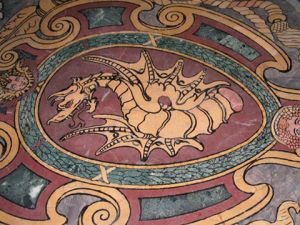
Vatican comes from 2 Latin words
Vatis = profetic or diviner
Can = serpent or snake
Vatican = Divining serpent
( Rev 12:9) And the great dragon was cast out, that old serpent, called the Devil, and Satan, which deceiveth the whole world.
Cardinal Manning says: “The Catholic Church is either the masterpiece of Satan or the Kingdom of the Son of God. A sacerdotal order is historically the essence of the Church of Rome; if not divinely appointed, it is doctrinally the essence of antichrist.”
In both these statements the issue is clear, and it is the same. Rome herself admits, openly admits, that if she is not the very kingdom of Christ, she is that of antichrist. Rome declares she is one or the other. She herself propounds and urges this solemn alternative
You shrink from it, do you? I accept it. Conscience constrains me. History compels me. The past, the awful past rises before me. I see THE GREAT APOSTASY, I see the desolation of Christendom, I see the smoking ruins, I see the reign of monsters; I see those vicegods, that Gregory VIII, that Innocent III, that Boniface VIII, that Alexander VI, that Gregory XIII, that Pius IX; I see their long succession, I see their abominable lives; I see them worshipped by blinded generations, bestowing hollow benedictions, bartering lying indulgences, creating a paganized Christianity;! see their liveried slaves, their shaven priests, their celibate confessors; I see the infamous confessional, the ruined women, the murdered innocents; I hear the lying absolutions, the dying groans; I hear the cries of the victims; I hear the anathemas, the curses, the thunders of the interdicts; I see the racks, the dungeons, the stakes; I see that inhuman Inquisition, those fires of Smithfield, those butcheries of St. Bartholomew, that Spanish Armada, those unspeakable massacres.
I see it all, and in the name of the ruin it has wrought in the Church and in the world, in the name of the truth it has denied, the temple it has defiled, the God it has blasphemed, the souls it has destroyed; in the name of the millions it has deluded, the millions it has slaughtered, the millions it has damned; with holy confessors, with noble reformers, with innumerable martyrs, with the saints of ages, I denounce it as the masterpiece of Satan as the body and soul and essence of antichrist”
– DR. H. GRATTAN GUINNESS
The great Revival Preacher of 1859
“G. 1 Cor. 8:4-13; Rom. 14:1-13; 1 Cor. 10:14, 18-21 — These passages concerning Christian liberty are discussed in more detail under Roman numeral IV. [Christian liberty can best be defined Biblically as “the freedom to engage in practices not prohibited by the Scriptures or denying oneself what is permitted (i.e., a moral choice of self-discipline) in order to be a more effective witness for God.” So the question must first be answered, “Is Christmas permitted?”] Briefly, some claim that Paul is teaching that the participation in pagan forms condemns no one, and therefore, participation in Christmas and its forms, even though arising out of pagan idolatry, is inconsequential. However, Paul nowhere approves participation in acts of idolatry, of which the participation in the pagan forms of Christmas comes dangerously close to doing. Instead, Paul is speaking of the liberty to continue in Jewish days of worship/festival that had been previously ordained under the Jewish law. There is certainly no liberty to bring outside pagan forms into the church’s worship services. Likewise, there is no liberty to Christianize Babylonian/Roman pagan holy days as special days.
Christians in the first century churches had the liberty to observe Old Testament holy days and feasts (days that had previously been revealed by God) if they were so immature as to do so. The weaker brother, Paul wrote, was at that time not to be censured for continuing to attach some importance to the Old Testament holy days, as a clear knowledge of their abolition in Christ was not yet given to him (the weaker brother). But to observe a pagan holy day is something this passage does not sanction. They certainly did not have the liberty to regard Babylonian/Roman pagan holy days (days that were invented by the devil) as special days. Again, that would have been idolatry, worldliness, and perhaps even a form of Satan worship on their part. Therefore, how can the observance of Christmas Day, or any other Babylonian/Roman Catholic holy day, be a matter of Christian liberty?
Galatians 4:9-11King James Version (KJV)
9 But now, after that ye have known God, or rather are known of God, how turn ye again to the weak and beggarly elements, whereunto ye desire again to be in bondage?
10 Ye observe days, and months, and times, and years.
11 I am afraid of you, lest I have bestowed upon you labour in vain.
2 Peter 2:21King James Version (KJV)
21 For it had been better for them not to have known the way of righteousness, than, after they have known it, to turn from the holy commandment delivered unto them.
From the comment line:
Asa (6/12/2014)
|
“ Great Sermon! ”
Good warnings about bringing pagan and Old Testament worship in the New Testament church. The sun has risen the shadows are ALL gone ! Still Waters Revival Books (6/18/2014) from Edmonton, Alberta
|
“The Lord hath made bare His holy arm in the eyes of all the nations; and all the ends of the earth shall see the salvation of our God.” – Isaiah 52:10
Suggested Further Reading: 1 Corinthians 14:26-40
In the old revivals in America a hundred years ago, commonly called “the great awakening,” there were many strange things, such as continual shrieks and screams, and knockings, and twitchings, under the services. We cannot call that the work of the Spirit. Even the great Whitefield’s revival at Cambuslang, one of the greatest and most remarkable revivals ever known, was attended by some things that we cannot but regard as superstitious wonders. People were so excited, that they did not know what they did. Now, if in any revival you see any of these strange contortions of the body, always distinguish between things that differ. The Holy Spirit’s work is with the mind, not with the body in that way. It is not the will of God that such things should disgrace the proceedings. I believe that such things are the result of Satanic malice. The devil sees that there is a great deal of good doing; “Now,” says he, “I’ll spoil it all. I’ll put my hoof in there and do a world of mischief. There are souls being converted; I will let them get so excited that they will do ludicrous things, and then it will all be brought into contempt.” Now, if you see any of these strange things arising, look out. There is that old Apollyon busy, trying to mar the work. Put such vagaries down as soon as you can, for where the Spirit works, He never works against His own precept, and His precept is, “Let all things be done decently and in order.” It is neither decent nor orderly for people to dance under the sermon, nor howl, nor scream, while the gospel is being preached to them, and therefore it is not the Spirit’s work at all, but mere human excitement.
For meditation: The Holy Spirit produces self-control, not loss of control (1 Corinthians 14:32; Galatians 5:22,23; 2 Timothy 1:7).
Sermon no. 185
28 March (1858)
365 Days with C.H. Spurgeon, Vol. 1. A unique collection of 365 daily readings from sermons preached by Charles Haddon Spurgeon from his New Park Street Pulpit.
 The X Mass Blog