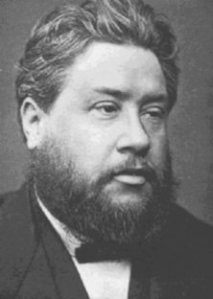
Whenever the Church has been thoroughly distinct from the world, she has always prospered. During the first three centuries the world hated the Church. The prison, the stake, the heels of the wild horse, these were thought too good for the followers of Christ. When a man became a Christian, he gave up father and mother, house and lands, nay, his own life also. When they met together, they must meet in the catacombs, burning candles at high noon, because there was darkness in the depths of the earth. They were despised and rejected of men. “They wandered about in sheep’s’ skins and goats’ skins, destitute, afflicted, tormented.” But then was the age of heroes; that was the time of giants. Never did the Church so much prosper and so truly thrive as when she was baptized in blood. The ship of the Church never sails so gloriously along as when the bloody spray of her martyrs falls upon her deck. We must suffer, and we must die, if we are ever to conquer this world for Christ. Was there ever such a surprising miracle as the spread of the gospel during the first two or three centuries? Within fifty years after Christ had ascended to heaven, the gospel was preached in every known part of the world, and there were converts to Christ in the most inhospitable regions. Further than the ships of Tarshish had the gospel flown; the pillars of Hercules had not bounded the industry of the apostles. To wild and uncivilised tribes, to Picts and Scots, and to fierce Britons, was the gospel proclaimed. Churches were founded, some of which have lasted in their purity to this day. And all this, I believe, was partly the result of that striking, that marked difference between the Church and the world. Certainly, during the period after Constantine professed to be a Christian, changing with the times, because he saw it would strengthen his empire-from the time when the Church began to be linked with the state-the Lord left her, and gave her up to barrenness, and Ichabod was written on her walls. It was a black day for Christendom when Constantine said, “I am a Christian.” “By this sign I conquer,” said he. Yes, it was the true reason of his pretended conversion, if he could conquer by the cross it was well enough; if he could have conquered by Jupiter, he would have I liked it equally as well. From that time the Church began to degenerate. And coming down to the Middle Ages, when you could not tell a Christian from a worldling, were you to find piety at all, or life or grace left in the lands. Then came Luther, and with a rough grasp he rent away the Church from the world-pulled her away at the risk of rending her in pieces. He would not have her linked in affinity with the world, and then “The kings of the earth stood up, and the rulers took counsel together, against the Lord and against His Anointed;” but He that sitteth in the heavens did laugh at them; Jehovah had them in derision. The Church went forth conquering and to conquer, and her main weapon was her non-conformity to the world, her coming out from among men. Put your finger on any prosperous page in the Church’s history, and I will find a little marginal note reading thus: “In this age, men could readily see where the Church began and where the world ended.” Never were there good times when the Church and the world were joined in marriage with one another. ~ C.H. Spurgeon
https://www.blueletterbible.org/Comm/spurgeon_charles/sermons/0305.cfm
 The X Mass Blog